

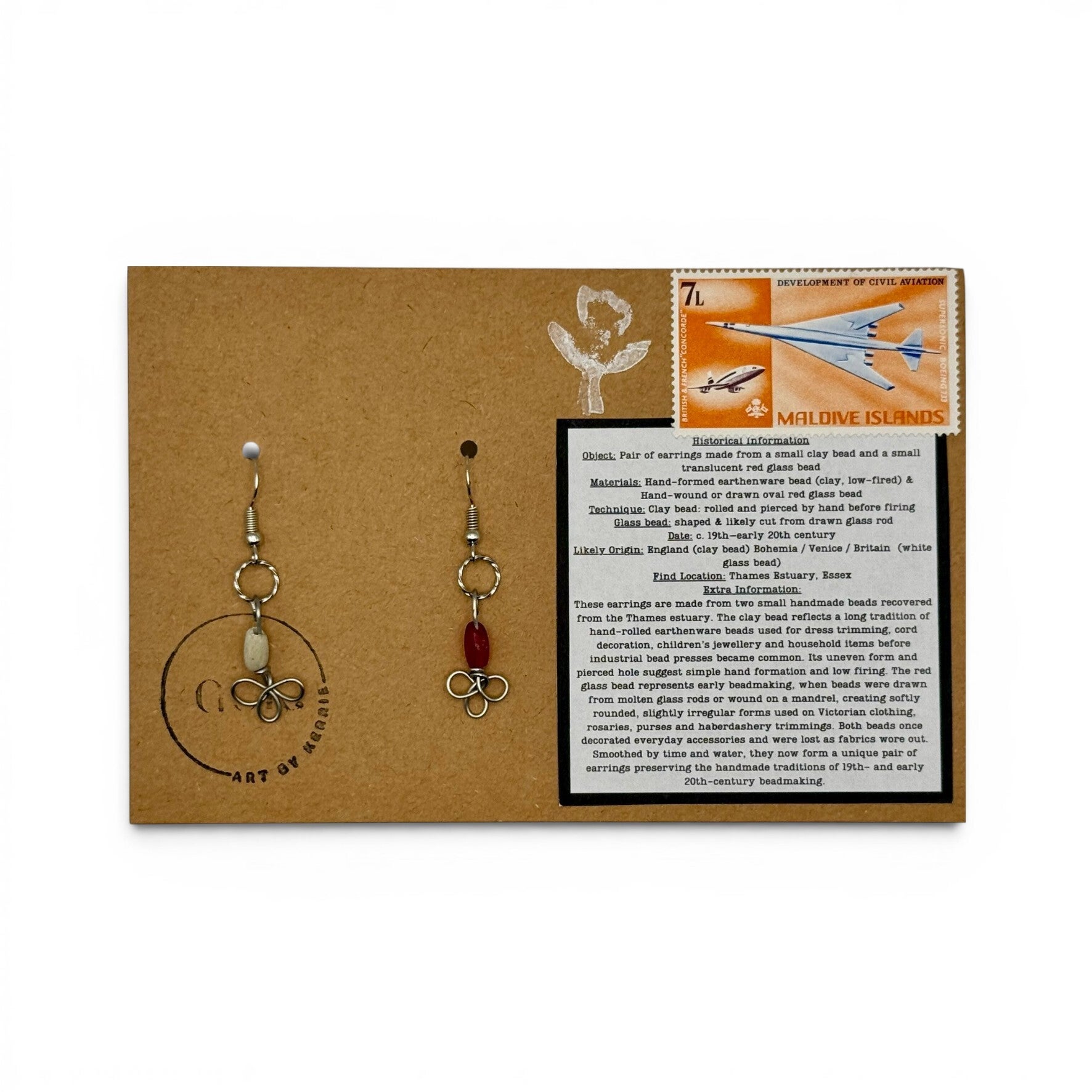
Mixed Bead Earrings
Historical Information
Object: Pair of earrings made from a small clay bead and a small
translucent red glass bead
Materials: Hand-formed earthenware bead (clay, low-fired) &
Hand-wound or drawn oval red glass bead
Technique: Clay bead: rolled and pierced by hand before firing
Glass bead: shaped & likely cut from a drawn glass rod
Date: c. 19th-early 20th century
Likely Origin: England (clay bead), Bohemia / Venice / Britain (white
glass bead)
Find Location: Thames Estuary, Essex
Extra Information:
These earrings are made from two small handmade beads recovered
from the Thames estuary. The clay bead reflects a long tradition of
hand-rolled earthenware beads used for dress trimming, cord
decoration, children's jewellery and household items before
industrial bead presses
d presses became common. Its uneven form and
The pierced hole suggests a simple hand formation and low firing. The red
The glass bead represents early beadmaking, when beads were drawn
from molten glass rods or wound on a mandrel, creating softly
rounded, slightly irregular forms used on Victorian clothing,
rosaries, purses and haberdashery trimmings. Both beads once
decorated everyday accessories, and were lost as fabrics wore out
Smoothed by time and water, they now form a unique pair of earrings, preserving the handmade traditions of 19th-20th-century beadmaking.
All Findings used are made with Stainless Steel.