

Double Drop Pendant

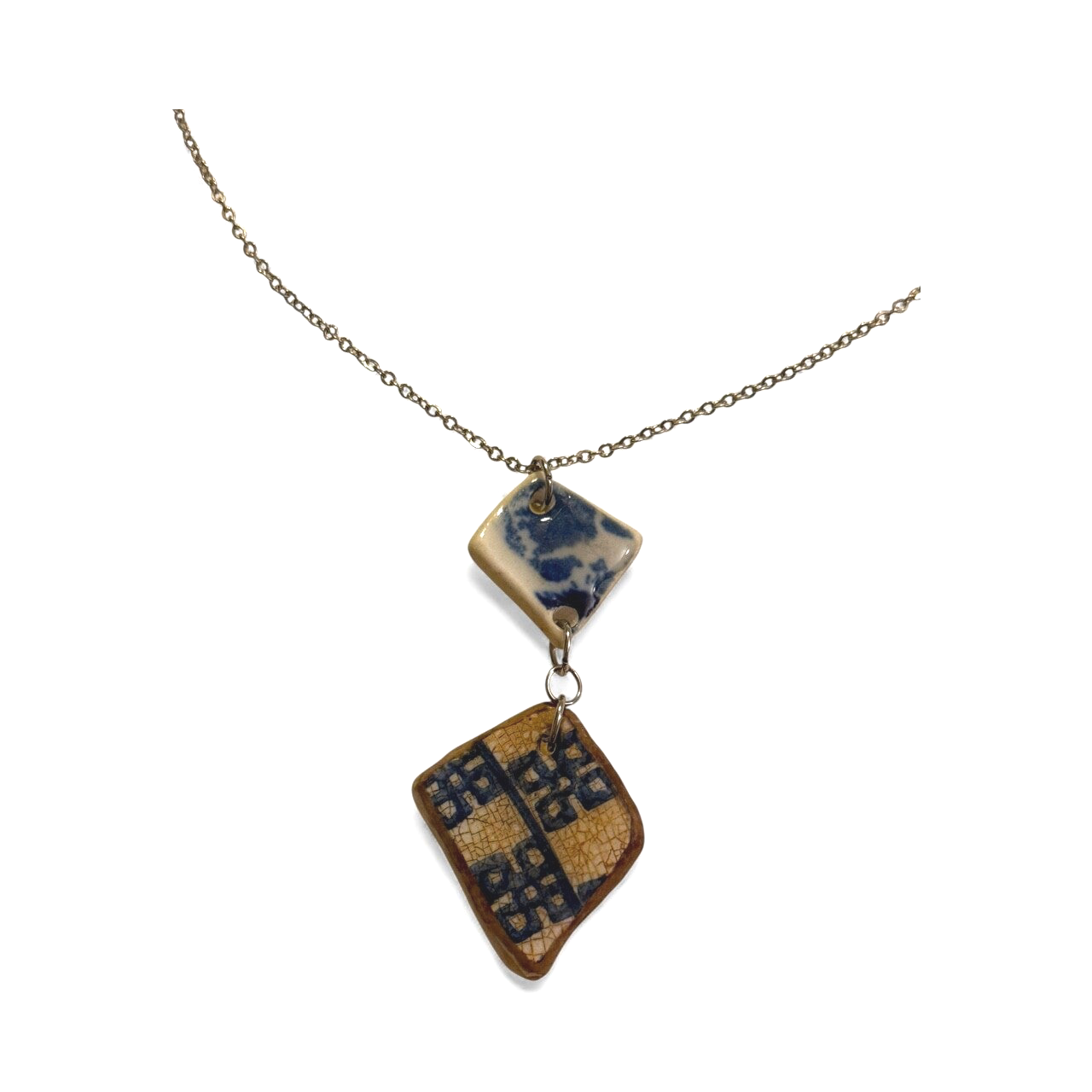

Historical Information
Object: Sponge-decorated / slip-decorated earthenware sherds
Fabric / Body: Buff/white earthenware with thick clear glaze
Technique: Blue hand painted/sponged repeated pattern
Date: c. 1830-1880
Likely Origin: Staffordshire, Yorkshire, Rural potteries
Pattern / Style: Early Victorian spongeware with slip-banded rim
Find Location: Essex Coast, England
Extra Information:
These fragments come from a piece of Victorian hand painted spongeware, a hand-decorated folk pottery style widely produced for everyday domestic use. Unlike transferware, spongeware was decorated by hand, using natural sea sponges, paint brushes, cloth-wrapped sticks, or improvised stamps dipped into coloured slips. The soft, irregular shapes and uneven colour on these sherds are diagnostic of this technique. Spongeware was the pottery of cottage kitchens, farmhouses, inns, and workmen's tables - inexpensive, cheerful, and robust. The combination of a coloured banded rim with sponged motifs is a known mid-19th century style, closely related to the mocha ware tradition of slip decoration. Because these wares were affordable and heavily used, they were frequently broken and discarded, which is why fragments commonly appear on river and coastal foreshore sites.